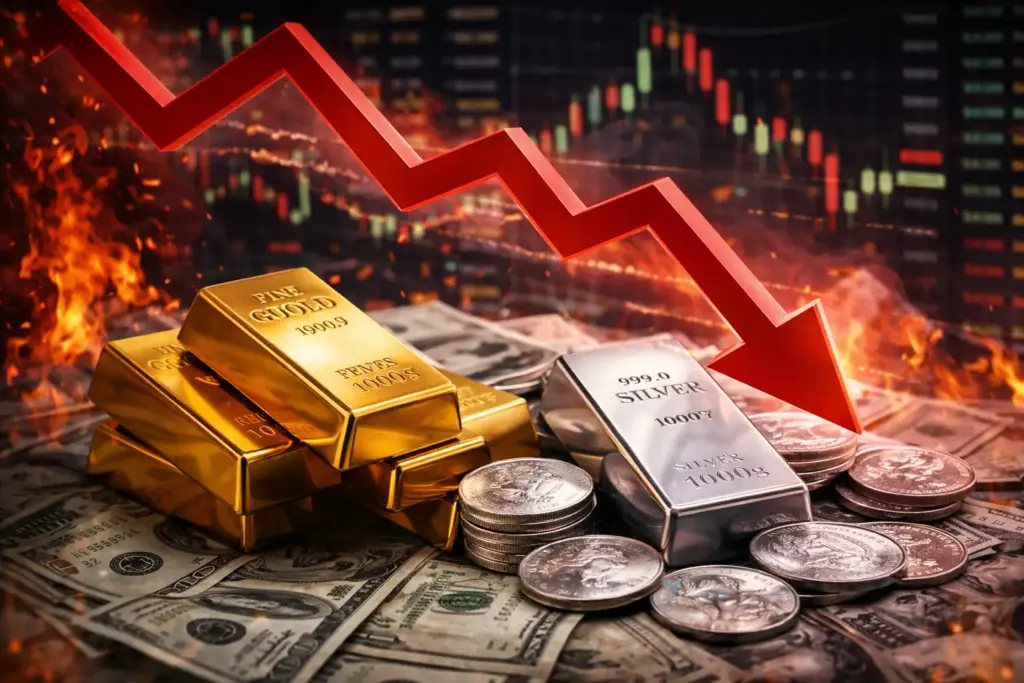
Gold and silver have plunged sharply after recent peaks, triggering a broader commodities sell-off as volatility spreads across global markets.

Global commodities markets were rattled on Monday as gold and silver extended a sharp correction following record highs in recent weeks, with knock-on effects rippling into equities, oil and broader risk sentiment.
Precious metals, which had rallied to extraordinary levels in late January 2026, experienced renewed selling pressure as traders reassessed expectations for monetary policy and market positioning, leading to one of the most volatile sessions in months.
Recent volatility across gold, silver and commodities highlights why keeping up with real-time market news matters for traders.
What triggered the sell-off
The brutal downturn in gold and silver this week is being linked to a shift in investor expectations around monetary policy leadership in the United States.
Markets reacted sharply when President Donald Trump’s nomination of Kevin Warsh as the next Federal Reserve Chair sparked a reassessment of future interest-rate directions, heightening the prospect of tighter policy and diminishing the appeal of non-yielding assets such as gold and silver. As a result, spot gold prices fell sharply, reaching their lowest levels in over two weeks as selling cascaded through bullion markets.
Added to this, major exchanges have increased margin requirements on metals futures, forcing some leveraged positions to unwind and amplifying downward price pressure.
How deep the declines are
After hitting multiple records just last week, bullion markets have retraced aggressively:
- Gold dropped sharply, slipping back below key psychological thresholds as threat of tighter monetary policy reshaped positioning.
- Silver’s losses were even steeper, with prices sliding significantly after fresh spikes in volatility.
The scale of the correction from recent highs well above $5,000 an ounce represents a dramatic shift from a rally fuelled by safe-haven demand and investor positioning earlier in the year.
Spill-over into broader markets
Metals weakness is not happening in isolation.The sell-off has contributed to broader risk pressure:
- Stock markets experienced downward pressure as risk assets sold off in sympathy with commodities.
- Industrial metals and energy contracts, including oil, also saw declines as traders repositioned away from more speculative ventures.
Such cross-asset reactions highlight how shifts in sentiment in one corner of the market can quickly reverberate.
What traders should watch next
In a market driven by volatility, there are a few key areas traders will be watching closely:
Monetary policy cues
Any further comments on US leadership and rate expectations could provide fresh direction for precious metals and risk assets.
Technical levels in metals
Breaks below recent support could signal undue momentum in selling, while rebounds would suggest profit-taking and positioning adjustments.
Correlations across asset classes
Strong moves in metals often spill into FX, equities and commodities, so tracking relative performance remains vital.
Why this matters for CFD traders
Rapid price swings and sharp trend reversals create both risk and opportunity. During fast markets, trading costs can increase unexpectedly as spreads widen – a risk many traders underestimate. We explain this in more detail in our guide on how spreads behave during volatility. In such environments:
- Wider spreads and slippage can challenge execution. In volatile conditions, execution speed and pricing accuracy become just as important as direction. That is why understanding execution quality matters for active traders.
- Risk management becomes central to position sizing
- Emotional decisions can lead to outsized losses or missed opportunities
While the metals sell-off may look alarming, corrections are not uncommon after extended rallies and understanding the why behind those moves is as important as watching the where of price action.
Periods of sharp market movement also underline the importance of trading with a reputable broker, particularly when spreads widen and execution conditions change. Traders can learn more in our guide on how to choose a reputable forex broker.