Bond markets are sending mixed signals as investors balance safe-haven demand with renewed inflation concerns following rising energy prices.

Government bond markets are showing an unusual reaction as geopolitical tensions in the Middle East ripple through global financial markets. Instead of a clear flight to safety, bond yields have moved in different directions as investors weigh safe-haven demand against renewed inflation risks linked to rising energy prices.
Usually, periods of conflict trigger a clear flight to safety in government bonds. Investors often buy US Treasuries and other highly rated sovereign debt, pushing prices higher and yields lower. However, this time the reaction has been less straightforward.
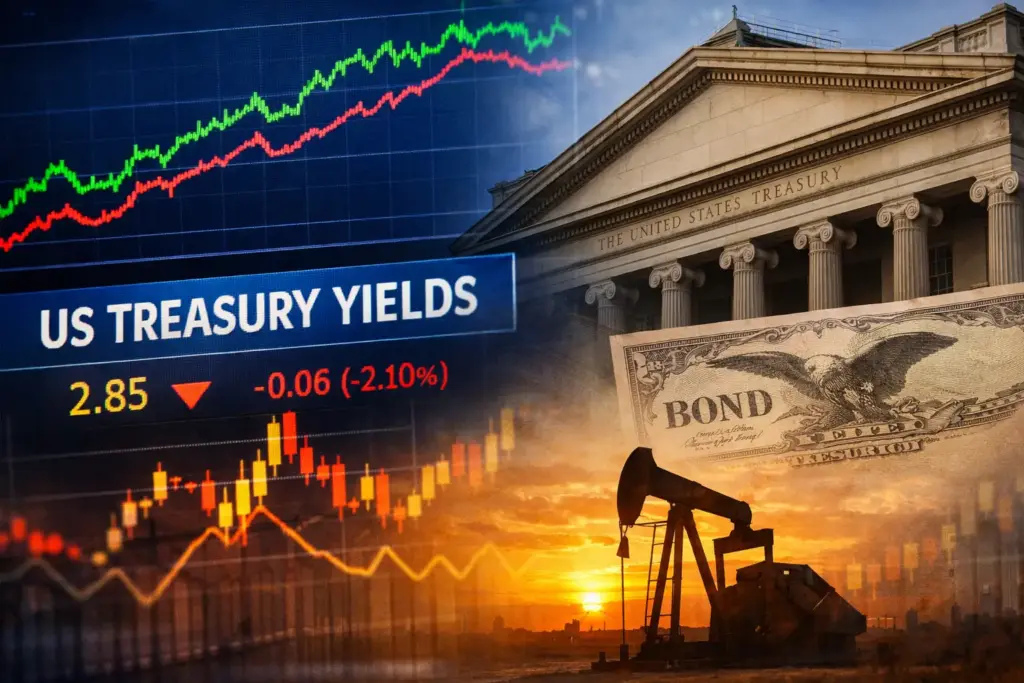
Bond yields initially moved lower as investors sought safe assets, but rising oil prices and renewed inflation concerns have complicated the picture. In several markets yields have edged higher as traders reassess how long interest rates may need to remain elevated.
Inflation Concerns Return
The sharp rise in energy prices following the escalation in the Gulf has revived concerns about inflation just as many central banks were beginning to see price pressures ease.
When oil prices climb, investors often demand higher yields on government bonds to compensate for the risk that inflation will erode future returns. The latest surge in energy prices, explored in our coverage of how geopolitical tensions have pushed oil prices higher, has added fresh uncertainty to inflation expectations.
That dynamic has been visible in recent sessions, with movements in Treasury yields reflecting a tension between safe-haven demand and worries about higher energy costs feeding through the global economy.
Safe-Haven Demand Still Present
Despite the pressure from inflation expectations, demand for government bonds has not disappeared.
Many investors continue to view US Treasuries and other high-quality sovereign bonds as one of the most reliable places to shelter capital during periods of geopolitical instability.
Recent trading has seen yields fall at times as investors move cautiously ahead of central bank decisions and economic data releases. At the same time, currency markets have already shown signs of defensive positioning, with traders moving into traditional safe-haven currencies such as the dollar and yen, as discussed in our recent report on why traders are turning to safe-haven currencies.
A Tug of War in the Bond Market
The result is a bond market caught between two opposing forces. On the one side, geopolitical uncertainty encourages investors to buy safe assets. On the other, higher oil prices raise concerns about inflation and government borrowing costs.
This push and pull has created a more volatile backdrop for fixed-income markets than traders might normally expect during geopolitical crises. Some analysts note that yields have already risen in response to the surge in energy prices and could move further if inflation expectations continue to climb. That possibility also complicates the outlook for monetary policy, a theme explored in our analysis of how rising energy prices are complicating central bank rate decisions.
What Traders Are Now Watching
Bond markets often provide an early indication of how investors view the economic outlook. Traders are now watching several key signals:
- movements in oil prices
- changes in inflation expectations
- guidance from central banks
- shifts in global risk sentiment
If energy prices remain elevated, bond yields may continue to reflect concerns about inflation returning just as policymakers consider easing monetary policy. At this time, the mixed reaction in government bonds highlights the uncertainty facing markets as geopolitical tensions intersect with inflation and interest-rate expectations.