The yen has recovered after Japan signalled that major pension funds may be encouraged to invest more in domestic assets, giving the currency breathing space after weeks of pressure near historic lows.

Japan’s currency has recovered after officials signalled that large pension funds may be encouraged to invest more in domestic assets.
The yen strengthened on Friday after Japan raised the prospect of steering more domestic pension money into local financial markets, giving the currency a lift after weeks of pressure near historic lows.
USD/JPY moved back below the 162 level after Japan’s finance minister said major pension funds, including the Government Pension Investment Fund, should increase investment in Japanese assets. The comments were enough to shift sentiment, even though no formal change to the fund’s asset allocation has been announced.
The move matters because Japan has been trying to manage yen weakness without relying only on direct currency intervention. The latest signal suggests officials may be looking at a broader set of tools, including long-term domestic investment flows, to ease pressure on the currency and support confidence in Japanese markets.
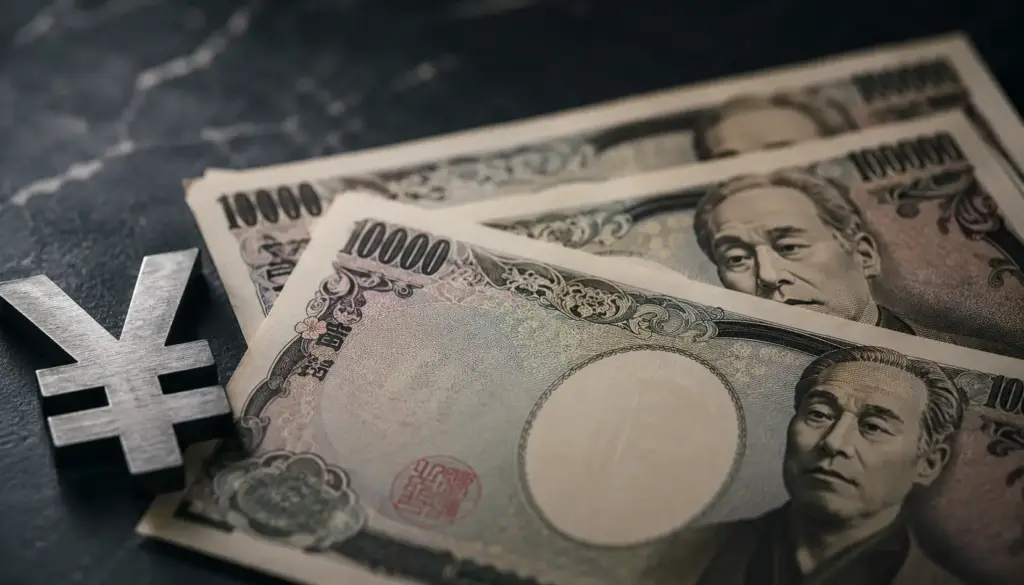
Yen recovers from recent lows
The yen has spent much of recent trading under pressure, with USD/JPY close to levels that have repeatedly raised concern in Tokyo.
Earlier this week, FX Trust Score reported that the yen remained near a four-decade low, leaving markets alert to possible Japanese intervention and sudden currency reversals. That risk has not disappeared, but the latest move shows that markets are also sensitive to policy signals that do not involve direct buying of yen.
Friday’s rebound was not a dramatic reversal of the long-term trend. The yen remains weak by historical standards, and the dollar is still trading at elevated levels against Japan’s currency. Even so, the reaction showed that investors are paying attention to any sign that Japan may try to reduce pressure through domestic capital flows rather than waiting for another intervention moment.
Japan looks beyond direct intervention
Japan has used foreign exchange intervention before, but intervention is a blunt tool. It can move markets quickly, especially when liquidity is thin, but its effect can fade if the underlying reasons for yen weakness remain in place.
Those reasons are still familiar. Japanese interest rates remain lower than those in several other major economies, encouraging investors to borrow in yen and invest elsewhere. At the same time, years of outward investment by Japanese institutions have created a steady demand for foreign assets.
The latest comments point to a different kind of support. If large pension funds and other domestic investors place more money into Japanese bonds, equities and other local assets, that could reduce the pressure created by overseas investment flows. It would not be the same as direct currency intervention, but it could still help shift sentiment if markets believe the change is meaningful.
Why pension flows matter
Pension funds are important because they control large pools of long-term money. When Japanese institutions invest overseas, they often need to sell yen to buy foreign currencies. That can add to downward pressure on the yen over time, especially when global assets look more attractive than domestic alternatives.
The reverse can also matter. If more money is kept at home or redirected into Japanese markets, it can reduce the need to sell yen and may support domestic bonds and equities. This is why the pension-fund signal drew such a quick market reaction, even though the details remain uncertain.
The Government Pension Investment Fund is especially important because it is one of the world’s largest pools of retirement savings. A major change in its allocation would not be a minor technical adjustment. It would be a significant signal about how Japan wants to balance domestic market support, retirement-system stability and currency pressure.
The signal still needs policy follow-through
The market reaction was positive for the yen, but investors will now want evidence that the signal turns into policy.
Changing the investment approach of a major public pension fund is not simple. It requires political support, institutional agreement and a clear explanation of how any shift would serve the interests of pension beneficiaries. Japan cannot treat retirement savings purely as a currency-management tool, which means any change would need to be framed around long-term investment objectives.
That is why the latest rebound should be read carefully. It shows that markets are receptive to signs of domestic support, but it does not yet prove that a sustained yen recovery is underway. A stronger yen move would probably require clearer policy direction, a change in Bank of Japan expectations, softer US rate pressure, or a broader shift away from carry trades that have benefited from Japan’s low-rate environment.
Intervention risk remains part of the story
The pension-fund signal may reduce some immediate pressure, but it does not remove the risk of sharper currency moves. USD/JPY is still high enough to keep official concern alive, especially if the yen weakens quickly or trading becomes disorderly. Japanese authorities have repeatedly shown that they are more concerned about speed and market instability than any single exchange-rate level.
That means the yen remains vulnerable to sudden turns. A comment from officials, a shift in US yields, or a change in risk appetite can still move the currency quickly. The broader market backdrop also remains unsettled, with FX Trust Score previously noting that investors have been preparing for larger moves across forex markets as central-bank signals, inflation pressure and geopolitical risks shift.
What to watch next
The next question is whether Japan’s pension-fund message becomes a concrete policy direction or remains a market signal.
Investors will be watching for further comments from the finance ministry, any update from the Government Pension Investment Fund, and signs that other domestic institutions are being encouraged to increase exposure to Japanese assets. Bank of Japan policy expectations will also remain central, because the interest-rate gap between Japan and the United States is still one of the main forces behind yen weakness.
The move is important because it shows that Japan may be trying to support its currency through longer-term domestic investment flows, not only through sudden intervention. This approach could help stabilise sentiment if it becomes credible. Without follow-through, however, the yen may remain exposed to the same pressures that pushed it close to multi-decade lows in the first place.