IG Group’s $1.3bn deal to buy Underdog shows how prediction markets, sports-linked speculation and retail trading platforms are moving closer together.

IG Group’s deal to buy Underdog shows how retail trading, sports-linked speculation and prediction markets are moving closer together.
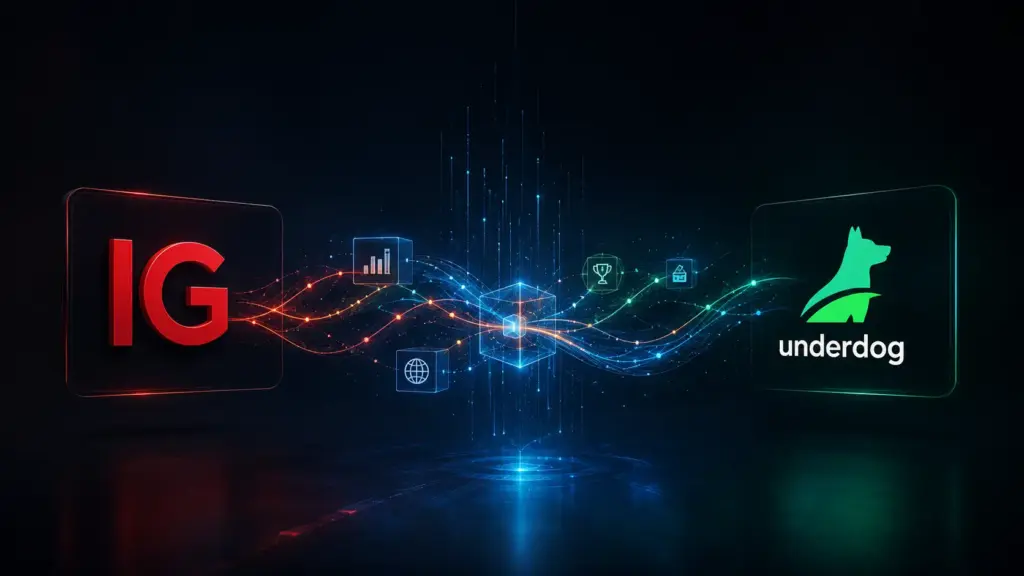
IG Group has agreed to buy US fantasy sports and prediction-markets operator Underdog for up to $1.3bn, marking one of the clearest signs yet that established retail trading firms see event-based markets as a major growth area.
The deal gives the UK-listed trading group a deeper foothold in the United States, where prediction markets have grown quickly and where the boundary between trading, sports products, forecasting and entertainment is becoming harder to define. IG said the transaction includes an upfront enterprise value of about $1.1bn and a possible earnout of about $200mn for Underdog shareholders.
The acquisition matters because IG is not a newcomer to leveraged markets or retail trading. The group already operates across CFDs, spread betting, exchange-traded derivatives, stock investing and cryptocurrency through brands including IG, tastytrade, Freetrade and Independent Reserve. Adding Underdog takes that strategy into a fast-moving part of the US market where users trade contracts linked to real-world outcomes rather than traditional assets alone.
IG moves deeper into US retail trading
IG has spent the past several years trying to broaden its business beyond its traditional base in UK and European leveraged trading. Its purchase of tastytrade gave the group a stronger position in US-listed options and futures, while Freetrade added a self-directed investment platform and Independent Reserve expanded its crypto reach in markets including Australia and Singapore.
Underdog gives IG a different kind of exposure. The company is known for daily fantasy sports, but it has also moved into prediction markets, which allow users to trade contracts based on whether a specific event happens. Those events can range from economic outcomes and elections to sports, culture and other measurable results.
For IG, the appeal is clear. The US has a large retail trading audience, a deep sports and entertainment market, and growing interest in event-based contracts. The acquisition gives IG a way to enter that space with an established consumer brand rather than building from scratch.
The deal also shows how trading firms are looking for growth outside traditional products. Forex, indices, equities and crypto remain important, but platforms are increasingly looking at new forms of market access that feel simpler, more social and more event-driven.
Why Underdog matters
Underdog is not simply a sports app. Earlier this year, the company acquired a CFTC-registered designated contract market and derivatives clearing organisation from Aristotle, the operator behind PredictIt. This move gave Underdog a route to develop its own federally compliant prediction-market exchange in the United States, rather than only acting as an intermediary for other venues.
This detail is important because prediction markets are not just about user engagement. They also require market infrastructure, clearing, settlement, compliance and regulatory treatment. A company that can combine a large consumer audience with exchange infrastructure may have a stronger position than a platform that only offers a simple betting-style front end.
For IG, Underdog’s value lies in that combination of consumer reach and regulated-market potential. The company sits at the intersection of fantasy sports, event contracts and retail speculation, which is exactly where a growing number of trading platforms are now looking for the next stage of growth.
Trading and entertainment move closer together
The Underdog deal highlights a larger shift in retail markets. For decades, trading platforms were built around assets such as currencies, shares, indices and commodities. Prediction markets change the format. Instead of asking users to buy or sell an asset, they allow users to take a position on whether an event will happen. The product can feel more intuitive because the contract is linked to a specific outcome, but that simplicity can also hide important risks.
A prediction-market contract may look straightforward, but users still need to understand pricing, liquidity, deadlines, platform rules and settlement. A market that pays out based on a yes-or-no result can move sharply as the event approaches, particularly when the outcome is uncertain and trading interest is high.
That makes the sector both attractive and controversial. Platforms see a large audience for event-based speculation. Regulators see products that may resemble derivatives, binary options or betting-style contracts, depending on how they are structured and where they are offered.
The IG deal shows that major trading firms are no longer watching prediction markets from the sidelines. They are beginning to treat them as a serious part of the future retail trading landscape.
Regulators are already watching
The growth of prediction markets has already drawn attention from regulators. In Europe, ESMA recently reminded firms that event contracts may fall under existing rules on binary options when they have similar economic features. FX Trust Score has also reported that European regulators are watching prediction markets more closely, particularly as retail participation increases and products are marketed in ways that may blur the line between trading and betting.
That European backdrop matters even though IG’s Underdog deal is focused on the United States. A product that can grow quickly in one market may still face tighter restrictions in another. Firms operating across multiple jurisdictions will need to think carefully about whether event contracts are treated as derivatives, gambling products, financial instruments or something else entirely.
The US market is also not free from regulatory questions. Prediction markets have grown rapidly, but their expansion into sports, politics and consumer-facing events has brought more attention from lawmakers, exchanges and state-level gambling interests. The result is a market opportunity that looks large, but not simple.
For traders, this is one of the most important parts of the story. The success of prediction markets will depend not only on user demand, but also on the rules that determine who can offer the products, how they are supervised and what protections apply.
Why platforms are chasing prediction markets
Retail trading platforms have a clear reason to look at prediction markets. Products are easy to understand at first glance, they can be built around events people already follow, and they create regular engagement because contracts have clear deadlines. A user does not need to follow a complex company valuation or macroeconomic model to understand a question such as whether a particular event will happen by a certain date.
This simplicity is powerful for customer growth, but it can also encourage overconfidence. Event contracts can still involve fast price moves, thin liquidity, emotional trading and a high chance of total loss if the outcome resolves against the user. The fact that a contract looks simple does not make it low risk.
For platform operators, prediction markets also create a bridge between trading and entertainment. They can appeal to customers who may not consider themselves investors, but who are comfortable taking a view on sport, politics, economics or culture. That is why the sector is attracting attention from trading firms, sports companies and fintech operators at the same time.
IG’s acquisition of Underdog reflects that convergence. It is a financial-market company buying a consumer sports and prediction-markets brand because the next phase of retail trading may look less like a traditional trading terminal and more like an event-driven marketplace.
What this means for retail traders
The most important question for retail traders is not whether prediction markets are interesting. It is whether they understand what they are trading.
Event contracts may appear simpler than CFDs, options or futures, but they are still risk products. Prices can move quickly when new information appears, when liquidity dries up, or when an event gets close to resolution. The final payout may also be binary, which means there may be little room for partial recovery if the market moves the wrong way.
The platform also matters. Traders need to understand who operates the market, how contracts are listed, how settlement works, whether the venue is regulated, and what happens if a market is challenged, paused or closed. These are not side issues. They are part of the product risk.
That is why the IG and Underdog deal fits naturally into the wider FX Trust Score conversation about trust, access and transparency. Retail trading is changing, but the same questions remain: who is offering the product, what protections apply, and does the user understand the risk before taking a position?
What comes next
The next stage will depend on regulatory approval, integration and the pace at which IG can turn Underdog into a larger prediction-markets platform.
Markets will also be watching how rivals respond. Fanatics has already moved towards prediction-market infrastructure, while platforms such as Kalshi, Polymarket and Robinhood have helped bring event contracts into wider public discussion. If established trading groups keep entering the sector, prediction markets could become a much more competitive part of retail finance.
The risk is that growth runs ahead of regulation. Europe has already signalled caution, and US regulators will remain under pressure to define the boundaries between financial trading, sports speculation and event contracts. That uncertainty may shape how quickly platforms can expand and how much trust users place in the products.
For now, IG’s $1.3bn move shows that prediction markets are no longer a niche corner of online speculation. They are becoming part of a much larger battle over the future of retail trading, where platforms are competing not only on spreads, commissions and market access, but on the kinds of events people are allowed to trade.