Brent crude surged above $92 a barrel as renewed US-Iran escalation raised fresh concerns over Gulf oil supplies, inflation and European interest rates. Traders are watching the Strait of Hormuz, bond yields and the ECB outlook closely.

Brent crude climbed above $92 a barrel on Monday as renewed military escalation between the United States and Iran brought fresh attention to the vulnerability of Gulf energy flows. For traders and investors, the bigger concern is not simply the latest rise in oil, but what it could mean for inflation, bond yields and the path of interest rates in Europe.
Oil markets refocus on Gulf supply risk
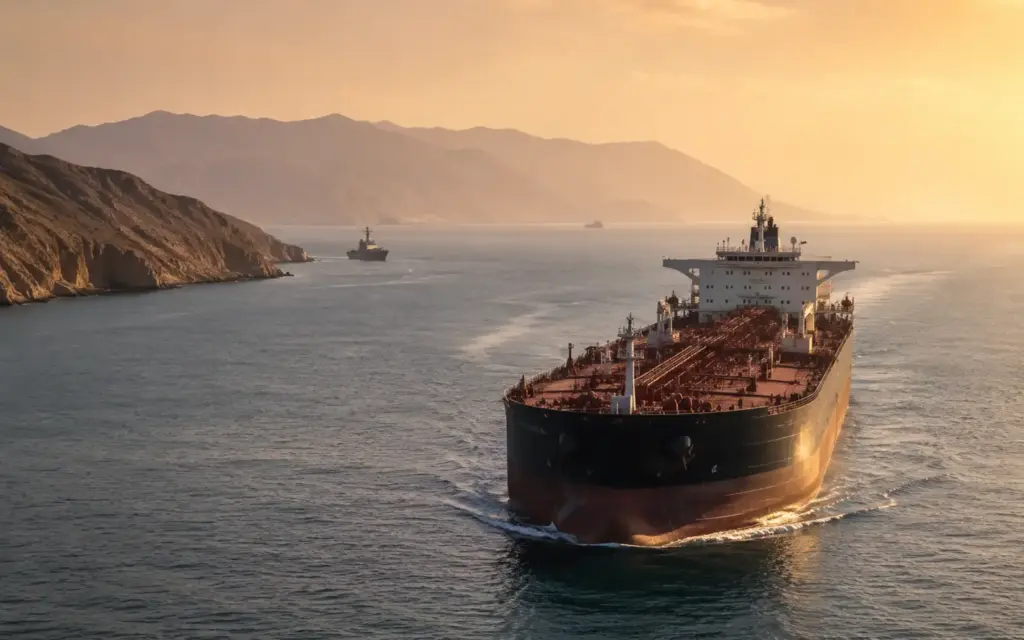
The latest move in crude appears to have brought geopolitical risk back to the centre of global markets. Brent rose sharply after US strikes on Iranian positions and subsequent retaliation raised concerns that the conflict could once again interfere with energy traffic through the Gulf. The Strait of Hormuz remains the critical pressure point. It is one of the world’s most important oil transit routes and any threat to shipping in the area tends to impact crude prices directly.
Oil markets have become accustomed to a higher degree of risk in the Middle East this year, however, it still remains sensitive to it.
Shipping volumes throughout the region have improved compared with the most disrupted stages of the conflict, yet they remain below normal levels. Consequently, the market is vulnerable to sudden changes in sentiment whenever military activity moves closer to strategic ports, shipping routes or energy infrastructure.
Why Europe is particularly exposed
For Europe, higher oil prices create an awkward economic problem. The euro area imports a substantial share of the energy it consumes, which means that sustained increases in global crude prices can quickly become an economic headwind. Higher energy costs affect transport, logistics, aviation, manufacturing and agriculture, however, the impact extends further.
Businesses facing more expensive fuel and production costs must either absorb the additional expense or pass part of it on to customers. This is how an energy shock can gradually feed into wider inflation. The problem becomes even more serious when oil remains elevated for an extended period rather than rising briefly before falling back. A short-lived spike may have only a limited effect on underlying inflation, whilst a prolonged increase can influence everything from delivery costs to household energy bills and corporate pricing decisions. Hence, Brent moving above $92 matters well beyond the commodities market.
Inflation fears return to the bond market
The clearest sign of renewed concern can be seen in government bonds. European sovereign yields moved higher as investors reassessed the possibility that inflation could remain more persistent than previously anticipated. Shorter-term yields are especially important because they tend to respond quickly to changes in expectations for central-bank policy. When investors believe interest rates may need to stay higher for longer, bond prices usually fall and yields rise.
The latest rise in oil therefore arrives at an uncomfortable moment for the European Central Bank. Policymakers are already trying to balance inflation risks against signs of weaker economic momentum. Another sustained increase in energy costs would make that task more difficult. If inflation remains elevated, the ECB has less room to relax monetary policy. Yet keeping borrowing costs high also places additional pressure on households, businesses and investment.
Energy shocks can therefore leave central banks facing two problems at the same time; stronger inflation and weaker growth.
Higher oil creates a difficult ECB trade-off
The ECB cannot directly control the price of oil, nor can higher interest rates produce more energy supply. However, what monetary policy can do is limit the risk that an initial energy shock spreads into broader and more persistent inflation.
If businesses and workers begin to assume that higher energy costs will remain in place, those expectations can influence wages, contracts and pricing decisions across the economy. Central banks then become more concerned that inflation is no longer being driven only by the original shock. This is why traders watch bond markets so closely when crude prices rise sharply.
A sustained increase in oil would make it more difficult for the ECB to justify easier policy, particularly if incoming inflation data remains uncomfortable. In that scenario, markets may begin to price a longer period of restrictive monetary conditions even if economic growth remains subdued. For European investors, this would have implications far beyond government debt.
Equities face uneven pressure
Higher oil prices do not affect every sector in exactly the same way. Energy producers can benefit from stronger crude prices, particularly when production costs remain relatively stable. Transport companies, airlines and energy-intensive manufacturers face the opposite dynamic because fuel and input costs rise. This creates a more fragmented equity-market response than a simple “oil up, stocks down” relationship.
However, the broader effect of a prolonged energy shock is usually more challenging. Higher household energy and transport costs reduce disposable income, whilst businesses face tighter margins and potentially weaker demand.
At the same time, higher bond yields can weigh on company valuations because future earnings are discounted at a higher rate. The combination of more expensive energy and tighter financial conditions is therefore particularly uncomfortable for sectors that are sensitive to consumer spending, borrowing costs or transportation expenses.
The Strait of Hormuz remains the key variable
The most important question for oil traders is whether the current escalation develops into a more serious threat to shipping. The Strait of Hormuz has always carried an outsized influence over crude markets because of the sheer volume of energy that passes through such a narrow corridor. Oil prices have already shown how quickly they can reverse when the outlook for Hormuz shipping changes, making developments around the waterway one of the most important variables for crude traders. Even when oil continues to flow, the perception of increased risk can push insurance costs higher, alter tanker routes and make buyers more cautious. In a nutshell, markets do not need to see a full closure of the Strait for prices to react. A credible threat of disruption can be enough to lift the geopolitical risk premium embedded in crude.
The next phase of the conflict is also bound to have an impact, far greater than Monday’s price move. Further strikes near shipping infrastructure, renewed mine threats or a deterioration in maritime security could push oil prices higher. Signs of de-escalation would have the opposite effect. For now, traders are being forced to keep both possibilities open.
What higher oil means for the euro
The currency-market implications are less straightforward than they may first appear. Traders who want to build a stronger understanding of these relationships can explore the FXTrustScore Education hub, which covers forex market mechanics, risk and the factors that influence currency pricing.
Higher inflation can support expectations for tighter monetary policy, which would normally be supportive for a currency. But Europe’s dependence on imported energy complicates that relationship. More expensive oil also worsens the region’s trade position, raises costs for businesses and households and can weaken the growth outlook. This means a sustained oil shock can create competing forces for the euro.
On the one hand, inflationary pressure could make the ECB more reluctant to cut rates or even increase speculation that policy will remain restrictive. On the other hand, weaker growth and a higher energy import bill can weigh on sentiment towards the single currency.
The balance between these two forces will depend heavily on how long oil remains elevated and whether the broader European economy continues to absorb the shock.
Gold and safe-haven assets remain in focus
Gold is also likely to remain sensitive to developments in the Gulf. Geopolitical uncertainty tends to increase demand for assets perceived as defensive, but the relationship is complicated by movements in real yields and the US dollar. Higher bond yields can create competition for gold because the metal itself does not pay interest. This means traders should not assume that every escalation will automatically produce a sustained rise in bullion.
Even so, the combination of geopolitical risk, inflation uncertainty and concerns over monetary policy keeps gold firmly within the broader market reaction. The same applies to government bonds and currencies.
The important point is that the oil move is not occurring in isolation. It is feeding into an increasingly interconnected repricing across commodities, fixed income, equities and foreign exchange.
What traders should watch next
The immediate focus will remain on political developments around the Strait of Hormuz and whether shipping conditions deteriorate even further. Any evidence that oil infrastructure or major export routes are becoming more difficult to secure would likely increase the risk premium in Brent. Conversely, a period of de-escalation or improving shipping flows could decrease some of the pressure.
European inflation data will also become more important. If price pressures remain stubborn whilst crude stays above $90, investors are likely to become more cautious about the prospect of easier monetary policy. This would keep bond yields sensitive to both energy-market developments and ECB communication.
The reaction in the euro will also be worth watching closely because it will reveal whether traders are placing greater weight on higher interest-rate expectations or on the negative growth effects of another energy shock.
For now, Brent above $92 is a reminder that the Gulf conflict remains a direct economic risk for Europe. The market is pricing the latest military escalation, but also questioning whether another prolonged rise in energy costs could delay progress on inflation, keep borrowing costs higher and make the ECB’s policy choices increasingly difficult.