Gold has reached its highest level in two weeks as rising oil prices and Middle East shipping risks brought inflation concerns back into the market conversation.

Gold hit its highest level in two weeks, as rising oil prices and Middle East shipping risks brought inflation concerns back into the market conversation.
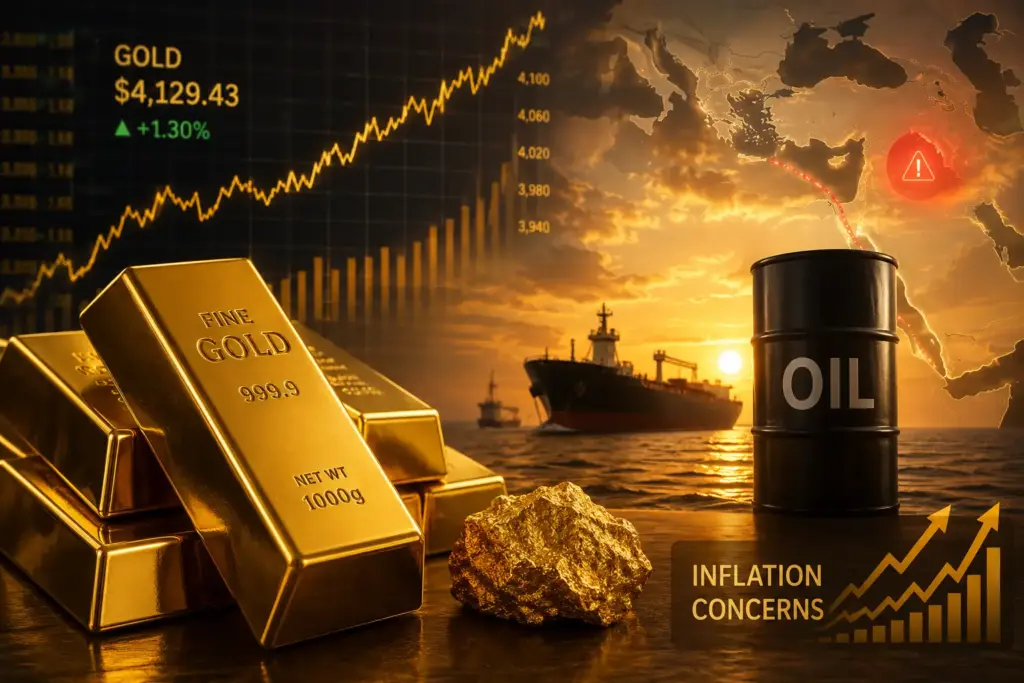
Gold prices climbed on Wednesday, 22 July 2026, with spot gold rising 1.3% to $4,129.43 per ounce in early trading and US gold futures gaining 1.4% to $4,134.50. The move took gold to its highest level since 7 July, supported by renewed buying after last week’s pullback and by a market still trying to assess the inflation impact of higher energy costs.
The rebound comes as oil prices remain elevated following fresh disruption concerns in the Red Sea and Gulf shipping routes. Gold is often supported by geopolitical uncertainty, but the current backdrop is more complicated because higher oil prices can also strengthen inflation expectations, lift bond yields and affect the path of interest rates.
Gold recovers after last week’s pullback
Gold’s latest move follows a sharp weekly fall that reflected a more difficult rate backdrop. Higher oil prices have revived inflation concerns, and that has complicated the usual safe-haven argument for gold because inflation risk can also support higher yields and a stronger dollar.
That tension explains why the metal has been moving unevenly. Geopolitical stress can draw demand into gold, but a more restrictive interest-rate outlook can work against it by raising the opportunity cost of holding a non-yielding asset. The current rebound suggests buyers have returned after the recent fall, although the market is still trading between those two forces rather than moving on a single clear driver.
FX Trust Score recently examined how inflation and rate expectations collide in the gold market, and the same issue remains central now. Gold is being supported by uncertainty, but the strength of that support depends on whether inflation risk is treated as a reason to seek protection or as a reason for policymakers to stay restrictive.
Oil rally keeps inflation concerns alive
The oil market remains an important part of the gold story, even when the immediate price move is described as technical buying or bargain hunting. Shipping routes through the Red Sea and the Gulf remain under pressure, with tankers carrying Saudi crude to Asia turning back after warnings from Yemen’s Houthis.
That matters because energy disruption does not only affect crude prices. Higher oil can feed into inflation expectations, bond yields and currency markets, which then influence gold. The metal can benefit from geopolitical unease, but the same events can also strengthen the argument for tighter monetary policy if higher energy prices threaten to keep inflation elevated.
FX Trust Score has also covered how oil prices have moved back to the centre of inflation concerns, and that link is becoming more important for precious metals. Gold is not trading only as a shelter from conflict; it is also reacting to how that conflict may change the outlook for inflation and rates.
Rate decision becomes the next marker
The Federal Reserve’s next policy meeting, scheduled for 28–29 July 2026, is now the next major event for gold. Economists still expect the central bank to hold rates steady, but recent market pricing and survey responses show that the risk of a later rate increase is being taken more seriously than it was a month ago.
That shift matters because gold is sensitive to changes in real yields and the dollar. A more hawkish message from policymakers could limit the recovery, especially if US yields rise or the dollar strengthens. A more cautious statement, or any sign that officials are reluctant to respond aggressively to energy-led inflation, could give gold more room to extend the rebound.
The market is therefore looking beyond the headline rate decision. The language around inflation, oil prices and financial conditions may matter more than the decision itself, because a hold is already widely expected.
Silver and platinum also rise
The move was not limited to gold. Silver, platinum and palladium also gained, showing broader demand across precious metals rather than a narrow move in one contract.
Silver rose strongly and remained one of the more closely watched metals because it sits between safe-haven demand and industrial demand. Platinum and palladium also advanced, helped by the same improvement in precious-metals sentiment, although their drivers are more closely linked to industrial use and the outlook for autos and manufacturing.
The broader rise suggests that Wednesday’s move was not only about gold regaining a lost level. It reflected a wider reassessment of metals after a volatile period for commodities, rates and geopolitical risk.
Volatility risk remains elevated
Gold’s recovery is important because it is happening at the intersection of several active market themes. Energy prices are rising, the dollar and bond yields remain sensitive to rate expectations, and geopolitical risk is affecting both shipping routes and inflation forecasts.
That combination can make short-term price action more volatile. During periods like this, spreads can widen quickly during volatility, especially around major data releases, central-bank events and fast-moving geopolitical headlines. Gold can move sharply when the same news changes both the safe-haven argument and the rate outlook at the same time.
For now, the two-week high shows that gold has regained support after last week’s decline. Whether that move continues will depend on the message from policymakers next week, the direction of oil prices and whether Middle East tensions continue to disturb the market’s inflation assumptions.
What comes next
The next stage for gold will be shaped by the days leading into the 28–29 July policy meeting. Any new escalation in the Red Sea or Gulf could keep safe-haven demand alive, while another rise in oil prices would strengthen the inflation side of the story.
The more difficult question is how policymakers interpret those risks. If higher energy prices are treated as a temporary shock, gold may find support from uncertainty without facing as much pressure from rate expectations. If officials signal that inflation risks require a firmer policy stance, the metal could struggle to extend its rebound even if geopolitical tension remains high.
Gold has recovered from last week’s weakness, but the market is not trading on fear alone. It is trading on the balance between conflict, inflation and rates, and that balance will be tested again when the next policy decision arrives.